
 See My Latest Article on HelloNation
What exercises work best when time is limited?
For busy residents in South San Francisco, CA, the most useful exercises are movements that train several major muscle groups at once and can be completed with little equipment. Short sessions built around squats, hinges, pushes, pulls, carries, and brisk cardiovascular intervals can support strength, mobility, and heart health without requiring a long gym visit.
A practical workout does not need to be complicated. It needs to fit consistently into the time available. Ten focused minutes performed regularly can be more useful than an ambitious routine that is difficult to maintain.
How can a 10-minute workout be structured?
A simple 10-minute session can use five exercises performed for 40 seconds each, followed by 20 seconds of rest. Repeat the circuit twice.
- Bodyweight squats
- Incline push-ups against a sturdy counter or wall
- Reverse lunges or alternating step-backs
- Hip hinges or glute bridges
- Marching in place at a brisk pace
This format provides a balance of lower-body strength, upper-body pushing, hip movement, and light cardiovascular work. The intensity should feel purposeful but controlled. A person should be able to maintain good technique throughout the session.
For someone returning to exercise, each movement can be performed for 20 to 30 seconds with longer rest periods. The goal is not to move as quickly as possible. Controlled repetitions usually provide more useful training than rushed ones.
Which full-body exercises provide the most value?
Full-body exercises are efficient because they involve multiple joints and muscle groups. They also resemble common daily activities such as sitting, standing, lifting, reaching, and carrying.
Squat variations
Squats strengthen the thighs, hips, and trunk. A chair squat is a useful starting point: lower toward a stable chair, lightly touch the seat, and stand without dropping into it. As strength improves, the chair can be used less for support.
Hip hinges
A hip hinge teaches the body to bend from the hips while keeping the spine relatively stable. It is the basic movement pattern behind picking up an object from the floor. Glute bridges are a floor-based alternative that trains the back of the hips with less balance demand.
Push-ups
Wall, counter, and knee push-ups can strengthen the chest, shoulders, arms, and trunk. The higher the surface, the easier the movement generally becomes. A stable counter may be appropriate for some people, while a wall is a gentler option.
Lunges and step-backs
Reverse lunges often place less stress on balance than forward lunges. Holding onto a wall or chair can make the movement more manageable. Step-backs can also improve leg strength for stairs, curbs, and uneven outdoor surfaces.
Carries
Carrying a moderately heavy object for short distances trains grip, shoulders, trunk stability, and posture. A loaded backpack, reusable bag, or household object can work if it is secure and does not cause leaning. The weight should remain manageable enough to carry with an upright posture.
Are short walks useful if there is no time for a full workout?
Yes. A brisk walk can provide meaningful cardiovascular activity, especially when it is performed consistently. A 10- to 15-minute walk during a work break, after a meal, or while completing a daily errand can add movement without requiring a separate long exercise block.
Residents may also divide activity into smaller periods. For example:
- Five minutes of walking in the morning
- Five minutes of mobility during the afternoon
- Ten minutes of strength exercises in the evening
This approach may fit well with apartment living, compact home layouts, and schedules shaped by commuting, caregiving, or variable work hours. Walking intensity can be adjusted by changing pace, adding gentle inclines, or including brief faster intervals.
A simple interval pattern is one minute at a comfortable pace followed by 30 seconds of faster walking, repeated several times. The faster periods should not cause pain, dizziness, or loss of control.
What is a practical weekly routine for busy adults?
A balanced routine can be built with three short strength sessions and several brief walking periods. The sessions do not need to occur on consecutive days.
Example:
- Monday: 10 to 15 minutes of full-body strength
- Tuesday: 15-minute brisk walk
- Wednesday: Mobility exercises and light walking
- Thursday: 10 to 15 minutes of full-body strength
- Friday: Short walk with several faster intervals
- Saturday: Strength exercises, recreational movement, or a longer walk
- Sunday: Rest or gentle mobility
The exact schedule can change from week to week. Missing one planned session does not require starting over. The next useful opportunity is simply the next available day.

How can exercise fit into a small home?
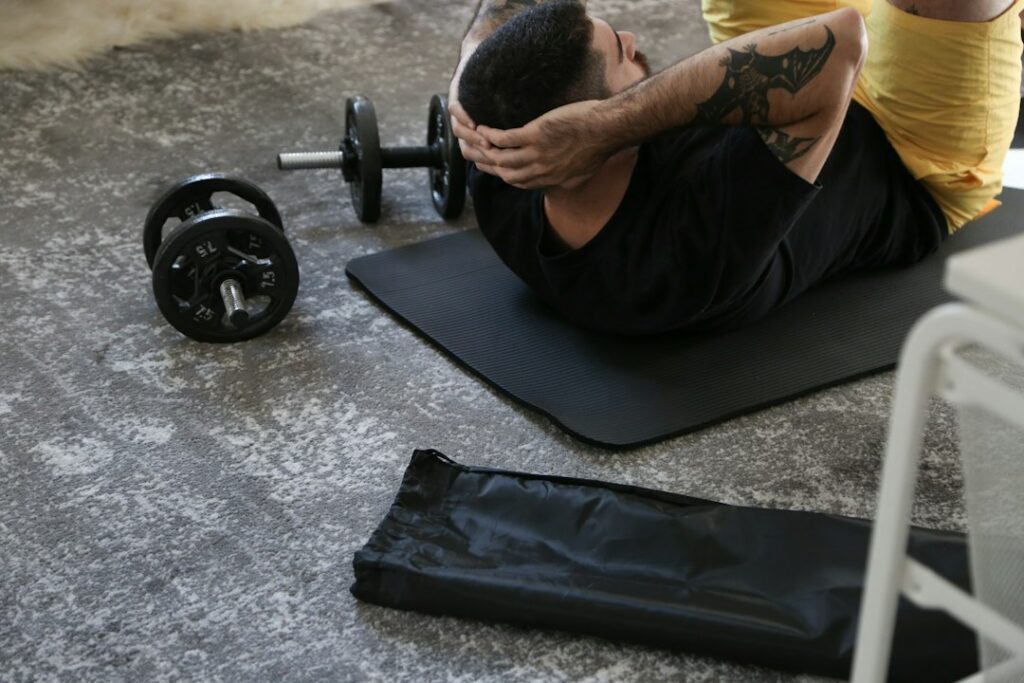
Limited space is rarely a barrier to basic strength training. A clear area roughly the length of a yoga mat is enough for many floor-based movements, while standing exercises may require only a few steps of room.
To make home exercise safer:
- Remove loose objects, cords, and slippery rugs from the exercise area.
- Use a stable chair rather than a lightweight or rolling chair.
- Keep enough room to extend the arms without striking furniture.
- Wear footwear that provides appropriate traction, especially on smooth flooring.
- Avoid jumping if noise, joint discomfort, or downstairs neighbors are concerns.
Quiet alternatives include calf raises, wall sits, controlled squats, marching, step-backs, glute bridges, and slow mountain climbers performed with the hands on a raised surface.
Can exercise be effective without weights?
Yes. Bodyweight exercises can improve strength when the movement is challenging enough and performed with control. Progress can come from increasing repetitions, slowing the lowering phase, adding a pause, using a more demanding variation, or reducing rest time.
For example, a squat may progress from a chair squat to a standard squat, then to a split squat. A wall push-up may progress to a counter push-up and later to a floor push-up. This gradual approach is often more practical than trying an advanced movement too early.
Household objects can add resistance, but they should be easy to grip and unlikely to break. Unstable or awkwardly shaped objects increase the risk of dropping or twisting.
What mistakes make short workouts less effective?
The most common problem is trying to do too much too quickly. Busy people may choose an intense routine, become excessively sore, and then avoid exercise for several days. A moderate routine that can be repeated is usually more useful.
Other common mistakes include:
- Skipping warm-up movements before vigorous exercise
- Using speed instead of controlled technique
- Training only the muscles that are easiest to notice
- Holding the breath during difficult repetitions
- Ignoring pain that changes movement patterns
- Treating stretching as a substitute for strength or cardiovascular work
A brief warm-up can include marching, shoulder circles, easy squats, and gentle hip hinges. The purpose is to prepare the body, not to create fatigue.
How should someone adjust exercise for weather and daily conditions?
South San Francisco has conditions that can change throughout the day, so outdoor walking may be more comfortable during a calmer or clearer part of the schedule. Cool, breezy, or damp conditions may call for an indoor backup plan such as marching, stair walking within the home, or a short strength circuit.
On warmer days, water, breathable clothing, and shade can improve comfort. Exercise should be postponed or modified during unusual conditions that create breathing difficulty, poor visibility, slippery surfaces, or unsafe walking routes.
People with a history of heart disease, significant joint problems, balance concerns, or symptoms such as chest pain, fainting, or unexplained shortness of breath should obtain individualized medical guidance before beginning vigorous exercise. Pain that persists or worsens also deserves attention rather than being pushed through.
The most efficient routine is the one that matches the person’s current ability, available space, and weekly schedule. A few carefully chosen movements, repeated consistently, can support strength and daily function even when longer workouts are not realistic.